


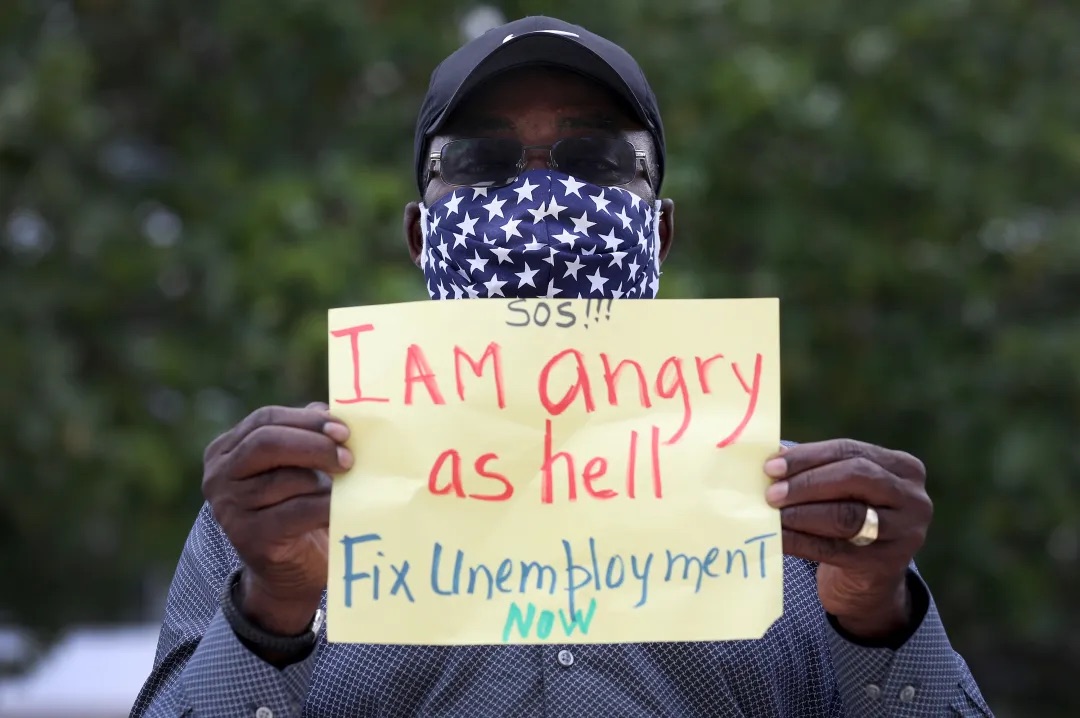
PHOTO : Getty Images
Noir Nation; while the current administration continues to bragg about the U.S economic “comeback,” Black Americans have been forced to face a completley different reality!
New labor data obtained by the Wall Street Journal (WSJ) reveals the Black unemployment rate has climbed to 7.5%—its highest level since the pandemic—signaling a troubling gap in who’s truly benefitting from the recovery.
🚨 The Numbers Behind the Crisis
In August, unemployment for Black Americans jumped from 7.2% in July to 7.5%, compared to the national average of just 4.3%. Economists warn this spike isn’t random—it’s proof that Black communities remain more vulnerable to layoffs, hiring discrimination, and unstable job sectors.
Angela Hanks of The Century Foundation put it plainly:
“Black unemployment is now at a rate that would represent a crisis if it were the overall unemployment rate.”
Join The Family!
💼 An Unequal Recovery
Industries where many Black workers are concentrated—like retail, hospitality, and healthcare support—have seen major cutbacks. Even Black college graduates, once thought to be shielded from economic downturns, are seeing their jobless rates nearly double.
Families are falling behind on rent, and even people with advanced degrees say they can’t find steady work, reports WCNC.
And while the U.S. Bureau of Labor Statistics revealed the country created 911,000 fewer jobs through March 2025 than initially reported by The Guardian, the Federal Reserve is already eyeing rate cuts to stimulate growth according to Reuters. But advocates argue that without targeted policies, Black families will still be left behind.
✊🏾 Demanding Change
This isn’t just an economic issue—it’s about survival and equity. Advocates are calling for stronger job programs, investments in Black-owned businesses, and real accountability for discriminatory hiring practices.
For Black America, the latest jobs report isn’t just data—it’s a warning sign that the recovery has been far from equal.

+ There are no comments
Add yours